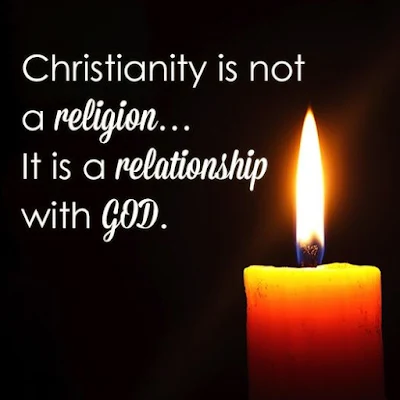
Showing posts with label Not Religion. Show all posts

God Sees The Heart

The Pharisees knew Scripture. They prayed publicly. They followed traditions carefully. They appeared moral, disciplined, and holy in front of other people. But Jesus exposed the deeper issue: outward religion without inward surrender: “These people honor Me with their lips, but their hearts are far from Me.” - Matthew 15:8

It’s possible to say the right things about God while keeping your heart distant from Him. A person can attend church, quote verses, post Christian content, sing worship songs, and still secretly love pride, lust, approval, money, status, or sin more than God Himself. External performance can hide internal emptiness for a long time.
That’s what made Jesus’ words so piercing. He wasn’t attacking sincere obedience. He was confronting hypocrisy - the kind of religion that looks alive externally, while the heart is away from God internally.
God isn't simply looking for religious activity. He desires truth in the inner person. Real repentance. Real surrender. Real love. Real intimacy with Him.
One of the most dangerous spiritual conditions is becoming skilled at appearing “close” to God, while quietly growing far from Him. That’s why this passage should humble every believer. Our question shouldn’t be: “How religious do I appear?” But: “Does my heart actually belong to Him?”
God sees beyond words, appearances, and reputation. He sees the heart.

- David Delfeld
Provided by "I Am With You Always"

Q&A: Am I "Religious" or "Spiritual"?

Question:
I'm a born again Christian, however, I do not believe in organized (man made) religion. Am I considered to be "religious", "spiritual" or something else?

Answer:
Great question! While "religious" and "spiritual" are often used interchangeably, they describe two different ways of relating to the world and the divine.

Being Religious

  • Organized Beliefs and Practices: Typically involves regular worship and rituals in a community setting, often according to the doctrines of a particular faith. Examples include attending church, mosque, synagogue, or temple.

  • Sacred Texts: Religions usually have holy books or scriptures, such as the Bible, Quran, Torah, or Vedas.

  • Authority Structure: There are often defined leaders, such as priests, imams, rabbis, or monks, who guide the community and interpret sacred texts.

  • Cultural and Social Identity: Religion can also be a big part of cultural and family identity, influencing social customs and holidays.

Being Spiritual

  • Individual Experience: Emphasizes personal and individual connection with the divine or the transcendent. This can include meditation, personal reflection, and experiencing nature.

  • Flexible and Inclusive Beliefs: A spiritual person may draw from multiple religious traditions or none at all, creating a personal belief system.

  • Less Formal Structure: There may be no set rituals or community worship; instead, spirituality is often more fluid and open-ended.

  • Focus on Inner Life: Often involves seeking personal growth, inner peace, and a deeper understanding of oneself and one's place in the universe.

Some people see themselves as both religious and spiritual, finding that the two aspects complement each other. Others might identify more strongly with one or the other. 

Spiritual Christian
  • Personal Faith: You maintain a strong, personal connection with Christian teachings and Jesus Christ, focusing on your relationship with God rather than following formal practices or church structures.

  • Flexible Practice: Instead of adhering strictly to church rituals, you might choose to express your faith through prayer, meditation, reading the Bible, and living according to Christian values in your daily life.

  • Individual Beliefs: Your faith is shaped by your personal experiences, reflection, and interpretations of Christian teachings, independent of institutional doctrines.

You might be considered part of a growing group of people who identify as "spiritual but not religious" (SBNR), where the emphasis is on personal spirituality rather than organized religion. It's all about what feels authentic and meaningful to you!

(Answer obtained via Microsoft Copilot
)